




- Home
- News
- Combination-Weave Jacquard: Where Fabric Design and Function Are Engineered Into the Weave
What Is Combination-Weave Jacquard Fabric?
Combination-weave Jacquard allows functional fabrics to alternate between two structurally distinct weave constructions—such as plain weave and twill—within a single continuous bolt. Unlike conventional Jacquard, which creates patterns through color or float variation within the same base structure, Combination-weave Jacquard programs the loom to alternate between different weave structures along the fabric length.
Because this transition occurs within the same continuous cloth, a subtle visual variation appears at the boundary. When designers place pattern pieces across this area, it can produce a third visual effect in the finished garment.
As the variation lies in the weave structure rather than the material itself, the fabric remains compatible with common functional finishing processes such as LDWR coating or membrane lamination. For applications requiring higher abrasion resistance, Cordura® reinforcement fibers can also be incorporated, enhancing durability for demanding outdoor performance environments.
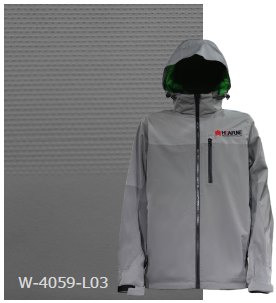
Its defining characteristics are:
- Seamless dual-zone construction — structural integrity begins at the fabric level; functional differentiation is woven in, not cut-and-sewn
- Three usable surface textures from a single material specification
- Predictable weave-interval cycling — enabling intentional pattern placement at the cutting stage
- Full post-processing compatibility —LDWR coating, membrane lamination, 4-layer construction, and optional Cordura® fibre integration
Functional Zone Placement in Combination-Weave Jacquard
Because the weave transitions follow a predictable interval across each fabric roll, pattern engineers can align these repeating texture zones with specific functional areas of a garment during pattern planning.
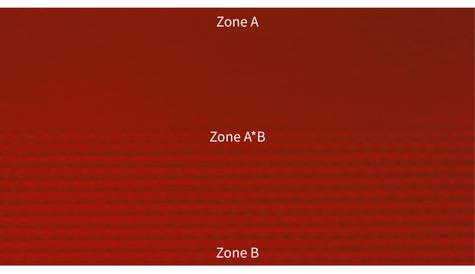
Zone A — Smooth weave texture (e.g., plain weave)
A cleaner, smoother surface created by a simpler weave structure, often positioned in areas such as the lower torso area to create a cleaner visual surface.
Zone B — Textured weave zone (e.g., dobby pattern)
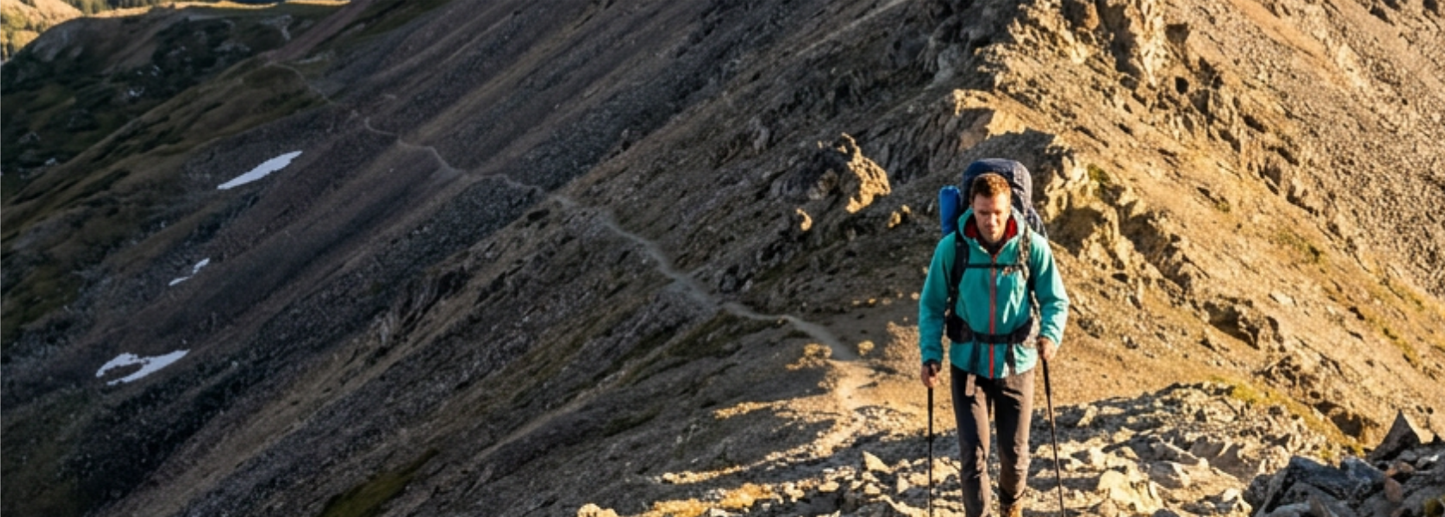
A more pronounced surface texture created by an alternate weave structure. This zone can be strategically placed in areas exposed to repeated friction — such as the shoulder region where backpack straps, climbing harnesses, or ski equipment contact the garment.
Transition zone — Integrated design feature
The natural boundary between the two weave structures can serve as a subtle onepiece design element while also marking the transition between functional zones within the garment.
Design Consideration
One consideration worth noting: as the weave structure is established during the weaving process, each Combination-weave Jacquard fabric roll follows a fixed repeat interval where the weave pattern changes. During pattern development, designers can plan pattern placement to align key garment areas with the intended weave zones, maximizing both functional performance and design expression.
Q&A
Q: How does it reduce manufacturing complexity?
Because the structural variation is created during weaving, the fabric already contains the intended texture zones when it reaches the cutting stage. Designers can align pattern pieces with these zones without combining multiple fabrics, reducing seam joins and simplifying garment assembly.
Q: Can Cordura® fibers be integrated?
Yes. Cordura® reinforcement fibers can be incorporated into selected weave intervals to increase abrasion resistance in high-friction areas such as shoulders or equipment contact zones.
Q: Is it compatible with LDWR coating?
Yes. As the variation lies in the weave structure rather than the material itself, the fabric remains compatible with LDWR coating, membrane lamination, and 4-layer construction.